
At Evolution Financial, we are monitoring the developments around coronavirus with a cautious eye, and offer the following as a summary of a number of Psychological Investment Behavioural Studies that we’ve accessed on behalf of our clients.
Our view is that we have been hired to not only look after client’s money and do the research for this, but also to take any concerns off their shoulders during this time – in essence, to relieve clients of the job of worrying about what it all means in periods of market volatility and uncertainty.
Aside from all the financial experts that we have access to, particularly in this situation we are also keeping a keen eye on information from the World Health Organisation and other medical and scientific experts. This article is a summation and our interpretation of the information provided in two recent and highly regarded investor psychology studies, diluted into layman’s language, and how these two great works are immediately relevant today with global uncertainty affecting markets.
We hope this will allow you, like it does us, to take a considered approach free of any media hype or sensationalised short term views.
We specialise in the High Net Wealth space, and if you have a minimum of $1million investable wealth or superannuation and have any questions on this article or any other aspect, one of our advisers would be available for an obligation free discussion.
Coronavirus, World Cup Soccer & Financial Decisions
Some of the following may seem somewhat dry – unfortunately unavoidably – but we believe it is worth the 3 minute read to help gain an understanding of the importance of making good decisions in bad times.
The late 2019 study “Know thyself financially: How financial self-awareness can benefit consumers and financial advisers” (by a doctoral candidate Nivriti Chowdhry, and Utpal Dholakia, a George R. Brown professor at Rice University in Houston, USA), they state something that at first appears far too obvious:
“Financial decisions are among the most important life-shaping decisions that people make.”
On the surface, this sentence alone can appear far too obvious and therefore inconsequential, especially during ‘normal’ world conditions. Of course, what you decide with your money affects your life. Good decisions lead to good results and increasing wealth, right?
But reread it again, and one poignant word stands out: life-shaping.
‘Good decisions’ can be easy when things are going well, but what about the harder decisions when things aren’t in the black? How do you also successfully avoid making bad decisions when the world is panicking, and the media are selling stories of blood in the streets?
The academic paper then highlights the relationship between an individual’s financial awareness, the prevalent economic conditions at the time, and the potential effect on decisions.
Being a scholarly study, the first important aspect they identify is an individual’s financial self-awareness (FSA). This is described as a detailed knowledge of one’s financial assets, liabilities, spending patterns and the impact on financial outcomes. Unsurprisingly, the work shows that a higher level of FSA is associated with positive financial decisions and satisfaction among individuals.
The document then talks of two distinct forms of financial knowledge required that can affect financial outcomes; FSA as described above, and financial literacy, such as understanding basic economic principles and financial concepts (such as how interest rates work, the effects of inflation, differences between individual stocks, bonds, and managed funds, currency exchange rates, various asset class’s performance characteristics, loans and debt structures, superannuation and various tax structures or measures, market awareness and general economic principles).
Both FSA & financial literacy together are considered instrumental and vital in helping individuals make prudent financial decisions. In their research they state that regardless of having good FSA, because of a low average level of financial literacy, many household decisions violate sound financial principles.
Self-awareness in a personal financial context is also crucial for consistently good decisions, or in other words an awareness and understanding of one’s own thought processes – as well as knowing what one does or does not know. This is never more tested than in times of stress, upheaval and uncertainty.
The authors go on to say that good financial self-awareness (FSA) is likely to promote the severing of behavioural responses that are financially harmful and help form new ones supporting positive outcomes, in other words making more good choices and reducing bad ones when it matters most.

“The Psychology and Neuroscience of Financial Decision Making”, (a joint work between Cary Frydman, an Assoc Professor of Finance & Business Economics at USC and Colin F. Camerer, a Professor of Behavioural Economics from Caltech, USA), discusses in part that as people are living longer in most parts of the world, understanding ‘how ageing affects financial decisions’ becomes increasingly important.
Interestingly, they state the empirical facts about household finance do not vary much across eight developed countries throughout North America and Europe; ~85% of households tend to not have any investments outside of meagre savings and small retirement funds, make several distinct types of financial mistakes and many have low financial literacy.
In their studies, (with great descriptions of neural activity in which cortex or striatum of the brain, and what chemical responses are emitted – which we’re saving you from delving into), they state in general older people appear to make poorer decisions in unusual financial environments, (generally due to a ‘flight to safety’ reflex action), however often many others will make good decisions based upon their “crystallized intelligence”; in other words, the wisdom of experience and expertise from prior situations to counterbalance initial reactions.
The behavioural evidence most relevant to household financial decisions is around ageing and patience. It is probably no surprise to you that there is evidence that people become more patient as they age; that is, early and delayed rewards generate more similar activity in the brain of older adults, whereas younger adults tend towards activity that provides active stimuli for a wide variety of immediately anticipated rewards, including money, status and social rewards. (So don’t be too harsh that your young children or grandchildren want instant gratification – it’s wired into them).
This also explains why the older we get, the better we become at reward-prediction errors; in other words, we become better at identifying potential mistakes or bad decisions based either on greed or fear.
In their study they describe how stock prices are also likely to be influenced by an investor’s time-varying mood, such as not only economic conditions but also the impact of weather and even sporting events on stock returns. Based in a study over a 30 year period, they quote that, “On the day after a country loses a World Cup soccer match, that country’s stock market tends to fall”. (While some of us may be upset that the Masters Golf, Australian Cricket Tour and some codes of football may be off, maybe there is some minor silver lining if it helps reduce those negative feelings associated with losing teams!)
The hypothesized mechanism is that the loss induces a bad mood, thus increasing risk aversion.
This next two statements are quoted direct from the study, and immediately relevant today:
“Owing to the fire hose of financial information available to households, it is hard to pay attention to everything. It follows that the financial information that receives disproportionate attention is likely to have a larger impact on household decisions and, potentially, on market prices.”
“In the mid-1980s, economists found that investors tended to ‘overreact’ to bad news: after a series of poor-earnings years, investors overreacted to the bad news and became excessively pessimistic. Other studies showed an opposite pattern of ‘under-reaction’: investors tended to bid up the price of a stock after good news was released, but by too little.”
We all know that prices in any market “move up and down as a result of collective activity”.
The reaction from the coronavirus has been major, however the quote below from an article on 18 March by Paul Taylor, Portfolio Manager Fidelity Australian Equities Fund, is worth bearing in mind:
“While the virus will have a very significant impact on all parts of society, it’s important to remember that it’s effectively one-off in nature. What this means is that it should be a 1 x price/earnings ratio rather than a 15 x price/earnings ratio impact event. This effectively means that the significant earnings hit to companies and markets should not be capitalised into share prices into perpetuity. Similarly, the hit to economic activity should also be seen as a one-off and not factored into economic growth in perpetuity.”
He also discusses how at the same time, “Oil demand is weak in part due to lower economic activity caused by COVID-19, and oil supply has increased due to a dispute between Saudi Arabia and Russia”, mentioning that “It is fair to assume that all of these impacts are temporary in nature”, and “A lower oil price is also stimulatory for economies”, and we should add, directly assists companies where fuel costs form significant parts of their balance sheets, or indirectly on their suppliers balance sheets.
The coronavirus is dominating the news every minute of everyday with media outlets competing with each other to sell news and advertising using attention grabbing headlines. Due to this ‘firehose of information’, not only is some of this panic understandable but so too is the short term effect on the markets.
As especially the experienced investors among you know, the trick is to be patient and financially self-aware or cognizant enough to realise this is a transient moment in time, and remember that the wise saying from the medieval Levent (Persian, Hebrew and Turkey region) from around 1200AD is as relevant today as it was back then; “This too shall pass”.
The two ‘life-shaping’ questions of utmost importance is how you get through this and behave as a human, and how you fare financially.
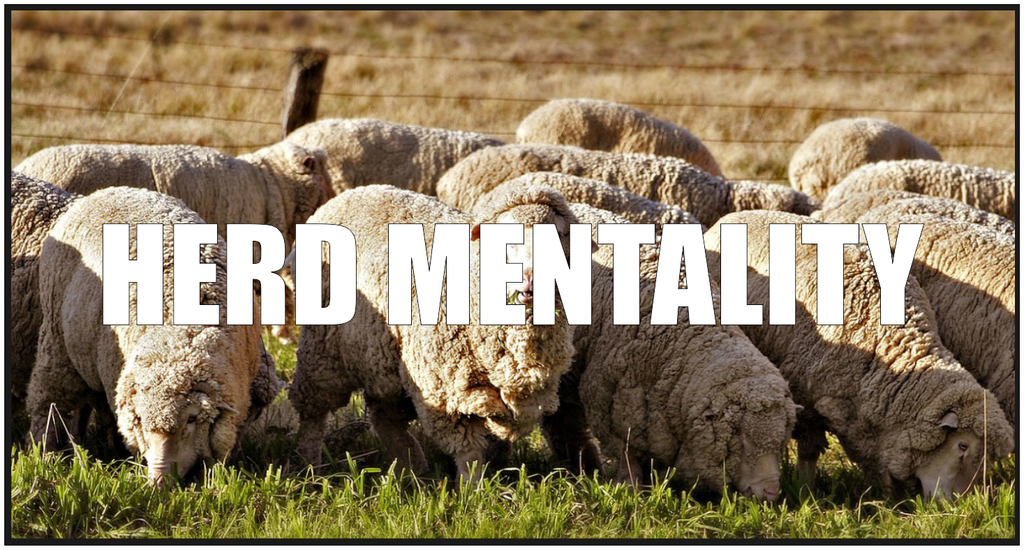
Just as the ‘herd immunity’ has been discarded as a viable option and avoidance of crowds is the best measure to take with COVID19, so too is it crucial to avoid the ‘herd mentality’ and the crowd investment psychology during these periods of media assisted panic.
Your own circumstances will largely dictate what your ‘good’ financial decisions should be. In some circumstances this may be a period rich in opportunity, whereas for others this may be the time it is vital to batten down the hatches financially. If you are interested in discussing your situation and decisions or finding out more about our services, we can be found here: https://www.evolutionqueensland.com.au/

At Evolution Financial, we care about your money, your peace of mind and your health. If you or someone close may be at risk of contracting the virus, we urge you to seek medical help and testing immediately. If you are concerned and wish further information, the following may assist:
- The World Health Organisation – Coronavirus Q&A section, as well as access to their Newsroom https://www.who.int/news-room/q-a-detail/q-a-coronaviruses
- Australian Government Department of Health Resources https://www.health.gov.au/resources/collections/novel-coronavirus-2019-ncov-resources
References:
- Paul Taylor, Fidelity International, Investment Insights, 18 March 2020 “Coronavirus strikes” https://www.fidelity.com.au/insights/investment-articles/coronavirus-strikes/
- https://www.fidelity.com.au/insights/investment-articles/coronavirus-strikes
- Nivriti Chowdhry and Utpal M. Dholakia | SSRN Electronic Journal | October 2019 https://papers.ssrn.com/sol3/papers.cfm?abstract_id=3474625
- Cary Frydman * Colin F. Camerer, Trends in Cognitive Sciences, September 2016, Vol. 20, No. 9, August 4 2016, “The Psychology and Neuroscience of Financial Decision Making”
- https://www.cell.com/trends/cognitive-sciences/fulltext/S1364-6613(16)30099-7?_returnURL=https%3A%2F%2Flinkinghub.elsevier.com%2Fretrieve%2Fpii%2FS1364661316300997%3Fshowall%3Dtrue#.XnQf24GoJfk.email
And if you’ve made it this far, well done! Here’s a list of all the sports you unfortunately won’t be enjoying while in a self-imposed quarantine: